
How to Repair a Leaning Fence That Will Stay Put
A fence rarely starts leaning all at once. It usually shifts a little after a hard winter, a heavy rain, a windstorm, or years of pressure from a gate. Knowing how to repair a leaning fence starts with finding the real cause. Pulling the fence upright without correcting the failed post, loose soil, or damaged rail may make it look better for a few weeks, but it will not hold.
For homes and managed properties in Eastern Massachusetts and Southern New Hampshire, frost movement is often part of the problem. Deep freezes and spring thaw can move soil around fence posts, especially where drainage is poor. Add aging wood, rot below grade, or a gate pulling on one section, and a small lean can turn into a full repair job.
Start by Finding What Is Actually Failing
Walk the length of the fence and look at it from both sides. A leaning section may be caused by one bad post, several posts moving together, broken rails, loose brackets, or a gate post under too much strain. The repair method depends on which part has failed.
Check whether the fence panels themselves are still straight. If the panels are level but the entire section is tipped, the posts are likely the issue. If posts are plumb but the fence sags between them, look for cracked or rotted rails, loose fasteners, or a panel that has pulled away from its supports.
With wood fencing, probe near the ground line using a screwdriver or awl. Wood can look sound above ground while being badly decayed where the post meets the soil. A post that feels soft, splits easily, or moves at the base should be replaced, not braced.
For vinyl, chain-link, and ornamental aluminum fences, inspect the post connections and hardware. Vinyl posts can loosen in an oversized hole or shift if concrete has cracked. Chain-link posts may lean after impact or soil movement. Aluminum fence posts and panels can be bent by falling branches, vehicles, or snow removal equipment. Do not assume every leaning fence has the same repair.
When a Simple Reset Can Work
A post that is solid and undamaged may only need to be reset if it has shifted in the ground. This is most common after frost heave, erosion, or saturated soil. The key question is whether the post itself still has enough strength to carry the fence.
First, remove pressure from the section. If there is a gate attached to the leaning post, support the gate before doing anything else. For a wood fence, you may need to remove a panel or detach rails so the post can be moved without cracking the surrounding section.
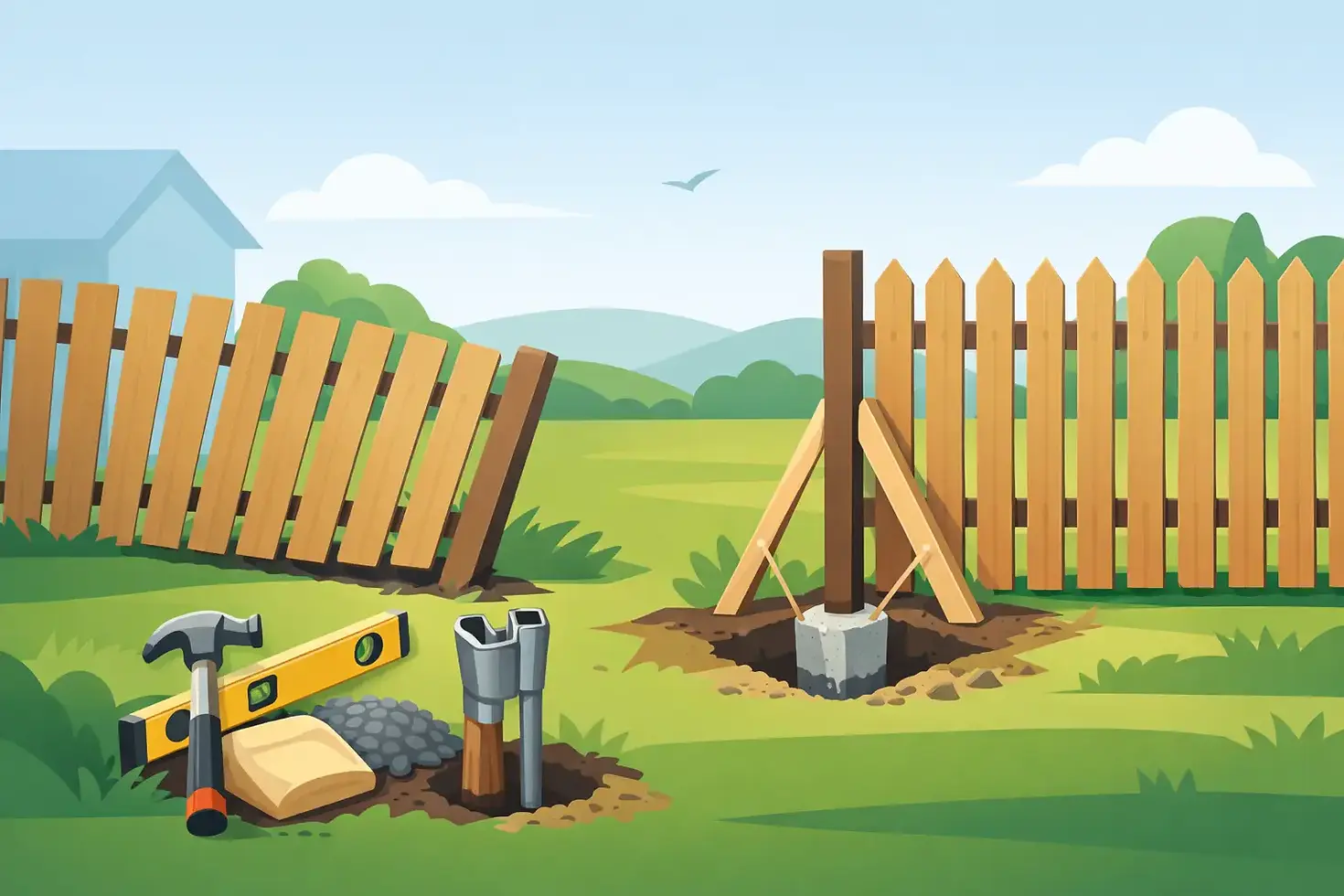
Use temporary braces to hold the fence upright. Set the post plumb with a level, then dig around the existing footing until you can see what has moved. In some cases, the old concrete footing is intact but tilted. In others, there may be little concrete at all, or the hole may have filled with loose, wet soil.
If the post is sound and the footing can be stabilized, reset it at the proper depth and add fresh concrete around the base. The post must stay plumb while the concrete sets. Brace it securely, and do not rehang a gate or place weight on the section too soon.
This approach can save a usable post, but it is not always the best value. Digging beside an old footing without damaging the fence can be difficult, particularly in tight yards, near landscaping, or where utility lines may be present. If the post is older or showing any sign of rot, replacement is usually the more durable repair.
Replacing a Rotted or Broken Fence Post
When a wood post has failed below grade, replacing it is the right move. A new rail, new pickets, or a fresh coat of stain will not correct a post that no longer has structural strength.
The fence section must be supported before the old post comes out. Once the rails or panel are detached, remove the failed post and its old concrete footing as completely as possible. Leaving a loose or broken footing in place can make it hard to set the new post at the correct location and depth.
Set the replacement post deep enough for the fence height and local conditions. In this area, posts need to account for freeze-thaw movement, not just the visible height of the fence. The hole should be wide enough to allow a proper concrete footing, and the bottom should be stable rather than sitting in soft, waterlogged soil.
Use a level on adjacent sides of the post before concrete is placed and again while it is being secured. A post can look straight from one direction while leaning from another. Once the post is set, reconnect the rails or panel at the original height. Check the line of the fence before fastening everything permanently.
For cedar fencing, a quality cedar replacement post is a good match where appearance matters. For pressure-treated wood, use material rated for ground contact. The right material matters because the post is carrying the load of the entire section, not just filling a gap.
Do Not Ignore Drainage and Gate Pressure
A repaired post can fail early if the conditions around it are unchanged. Water that collects at the base of a fence can soften soil, contribute to rot, and push on concrete during freeze-thaw cycles. If downspouts, driveway runoff, or a low spot direct water toward the fence line, address that before or during the repair.
Gates are another common source of trouble. A gate post carries more force than a standard line post, especially when the gate is wide, heavy, or used constantly. If a gate drags, does not latch, or pulls the fence out of line, the repair may require resetting or replacing both gate posts. Simply adjusting the hinges may hide the problem without fixing it.
A properly repaired gate should swing freely, latch without being lifted or pushed, and leave even spacing around the opening. If it is an entry point for a pool area, pet enclosure, or commercial property, reliable latching is more than a convenience. It is part of keeping the property secure.
Material-Specific Repairs Matter
Wood and Cedar Fences
Wood and cedar fences often lean because of post rot, rail failure, or loose fasteners. Individual boards and rails can usually be replaced, which makes wood repair flexible. The trade-off is that new boards may not match older weathered wood right away, and a section with several aging posts may be better rebuilt than repaired one post at a time.
Vinyl Fences
Vinyl fence repairs require care because panels, rails, and posts are designed to work together. Forcing a shifted vinyl section back into place can crack a rail or damage a routed post. A loose or leaning vinyl post often needs to be exposed and reset so the panels sit square and move as intended with normal temperature changes.
Chain-Link and Aluminum Fences
Chain-link fencing can often be straightened and retensioned after a post repair, provided the fabric is not stretched or torn. Aluminum fence panels are durable, but bent rails, damaged brackets, or an out-of-plumb post can affect the whole run. Matching the correct components and restoring proper spacing is what keeps the repair looking clean.
When to Call a Fence Contractor
A homeowner can handle a minor reset when the post is sound, the section is small, and there is clear access to the work area. But some repairs are better handled by a fencing crew. That includes long runs of fence that are leaning, heavy gates, broken concrete footings, damage near a pool enclosure, fence lines close to utilities, and repairs where matching an existing vinyl or aluminum system matters.
A professional repair also makes sense when more than one post is moving. Several leaning posts can signal poor drainage, shallow installation, widespread rot, or an older fence reaching the end of its service life. Repairing only the worst post may not be the best use of your money if the next two are likely to fail soon.
Shannon Fence Co., Inc. has repaired and installed fences for local property owners since 1992. A good repair should restore the strength and appearance of the fence without leaving your yard torn up or creating a new weak point down the line.
Before you decide to patch, reset, or replace, look at the whole fence line and the conditions around it. The best repair is the one that keeps the fence straight through the next storm, the next thaw, and everyday use.


Comments